The best way to upgrade a Sur-Ron Ultra Bee is to build control before power. Start by checking the bike's brakes, controls, tires, and suspension setup. Choose wheels and tires for the terrain you actually ride. Add power only after the chassis is working properly, then finish the build with protection, hardware, and lighting.
The Ultra Bee is capable in stock form. The point of upgrading one is not to replace every part—it is to make the bike fit your weight, terrain, and riding style. This guide lays out a practical order for trail, track, and pavement-focused builds.
What is the Sur-Ron Ultra Bee?
The Sur-Ron Ultra Bee is a mid-size electric off-road motorcycle positioned above the Light Bee. The MY24 platform uses a 74V 55Ah (4,070Wh) battery, a 12.5kW peak motor, 19-inch front and rear wheels, and adjustable suspension with 9.4 inches of travel. Sur-Ron lists a 56 mph top speed and 187-pound curb weight for that version.
Source: Sur-Ron Ultra Bee specifications
The 2026 Ultra Bee HP X is a different, higher-output model with a 74V 60Ah battery, 24.5kW maximum output in Turbo mode, and a 19-inch front/18-inch rear wheel combination. That model-year distinction matters: wheel, brake, controller, battery, and wiring compatibility can change between versions. Before ordering, record your bike's model year, market version, wheel size, and any parts already installed.
Source: Sur-Ron Ultra Bee HP X MY26 specifications
Choose upgrades by riding style
There is no single correct Ultra Bee build. A street-focused rider and a trail rider should spend money in different places.
| Riding style | Start with | Add next | Avoid |
|---|---|---|---|
| Trail / woods | Controls, tires, protection | Suspension setup | Chasing peak power before traction |
| Motocross / jumps | Suspension, brakes, ergonomics | Wheels and cooling | Using street tires off-road |
| Pavement / supermoto | 17-inch wheels and road tires | Brake setup, suspension tuning | Assuming wheels make the bike street legal |
| Mixed use | Maintenance, controls, suitable hybrid tires | Protection and range | A setup that compromises both terrains |
For most riders, the sensible sequence is:
- Establish a safe mechanical baseline.
- Improve controls and braking where needed.
- Match wheels and tires to the surface.
- Set suspension for rider weight and terrain.
- Add power and range as a complete system.
- Finish with protection, hardware, and lighting.
1. Establish a safe baseline
Before buying performance parts, make sure the stock bike is working as designed. An upgrade cannot compensate for loose hardware, contaminated brake pads, incorrect tire pressure, a worn chain, or poorly adjusted controls.
Check the following:
- Brake-pad thickness, rotor condition, lever feel, and fluid leaks
- Tire condition and pressure
- Steering-head, linkage, and wheel-bearing play
- Chain tension, alignment, and lubrication
- Axle, brake, suspension, and handlebar fasteners
- Throttle operation and cable or wiring routing
- Battery mounting, connectors, and visible wiring damage
Use the owner's manual and each component manufacturer's instructions for inspection intervals and torque values. Do not copy a torque value from another Sur-Ron model; similar-looking hardware may use a different specification.
2. Improve braking and controls
The Ultra Bee already has motorcycle-style hydraulic brakes, so a complete brake replacement is not automatically the first purchase. Start by identifying the problem you want to solve: lever position, pad feel, heat fade, rotor wear, rear-brake control, or stopping performance after a power increase.
A useful brake setup can include:
- Fresh pads in a compound suited to your terrain and temperature range
- Straight, serviceable rotors with the correct thickness
- Properly bled hydraulic lines and correctly positioned levers
- An Ultra Bee foot-brake conversion for riders who prefer motorcycle-style rear-brake control
- A higher-capacity system only when the current setup cannot meet the build's demands
Changing pad compound can alter initial bite, modulation, noise, and rotor wear. A larger rotor can increase braking leverage and heat capacity, but only when the rotor, bracket, caliper, wheel, and fork are designed to work together.
Fitment note: FXT's “Ultra Bee brake kit” for the Sur-Ron LBX/E-Ride Pro uses Ultra Bee brake hardware, but it is not a replacement kit for the Ultra Bee itself. Ultra Bee owners should browse model-specific options or ask FXT to confirm fitment before ordering.
Shop: Ultra Bee foot-brake kit · E-moto brakes and components
3. Match wheels and tires to the terrain
Wheels and tires create one of the most noticeable changes in how an Ultra Bee steers, grips, and absorbs bumps. The right choice depends on where the bike spends most of its time.
| Setup | Best for | Main benefit | Main tradeoff |
|---|---|---|---|
| Stock-size dirt wheels | Trails, loose terrain, obstacles | Off-road grip and rollover ability | Slower steering on pavement |
| 17-inch supermoto wheels | Pavement, kart tracks, closed-course supermoto | Broad road-tire choice and quicker turn-in | Less rollover ability and ground clearance |
| Hybrid / dual-purpose tires | Mixed surfaces | Fewer wheel changes | Less specialized at either extreme |
When comparing wheelsets, confirm:
- Front and rear axle fitment
- Rotor diameter and caliper alignment
- Sprocket and chain-line alignment
- Tire clearance at full suspension travel
- Sensor or magnet compatibility, where applicable
- Whether the listed package includes tires, rotors, sprocket, spacers, and hardware
Do not describe a wheelset as “bolt-on” until its exact configuration has been confirmed for your bike's year and existing brake or suspension parts.
“Best supermoto setup I've seen for the Ultra Bee. Quality is top tier and it completely changed how the bike rides. Worth every dollar.” — Verified FXT Racing buyer, Ultra Bee Supermotos
Shop: Ultra Bee supermoto wheelset · Chrome Ultra Bee supermoto wheelset · Browse all wheels
4. Set up the suspension for your weight
Suspension setup is often a better first investment than replacement suspension. The goal is to keep the tires connected to the ground while giving the bike enough support under braking, cornering, and impacts.
Work in this order:
- Put on your normal riding gear and measure sag using the component manufacturer's method.
- Set spring preload so the bike sits in the intended part of its travel.
- Record the current rebound and compression settings.
- Change one adjuster at a time, in small increments.
- Test on the same short section of trail or track after each change.
- If correct sag requires excessive preload, or the adjusters stay near their limits, choose springs or suspension built for your weight and use.
Symptoms matter. Bottoming frequently points to insufficient spring or compression support. A harsh, deflecting front end may be over-damped, over-sprung, binding, or simply running the wrong tire pressure. Diagnose before replacing parts.
Shop: Ultra Bee suspension parts
5. Treat power and range as a system
Once the chassis is sorted, controller, motor, and battery upgrades can change acceleration, sustained output, tuning control, and range. They also increase cost, heat, current demand, and the consequences of a setup error.
Do not choose a controller from its peak-power number alone. A reliable power build requires the battery, battery-management system, controller, motor, wiring, connectors, gearing, cooling, and tune to work together.
Before ordering, answer these questions:
- Is the controller compatible with the stock motor and battery?
- What battery voltage and current can the complete system safely support?
- Does the upgrade require a wiring harness, display, app, or sensor change?
- Which settings preserve smooth low-speed control and safe component temperatures?
- How will gearing and tire diameter affect acceleration, motor speed, and heat?
- What installation, tuning, and warranty support is included?
A higher-capacity battery can add range, but actual range still depends on speed, rider weight, terrain, temperature, tire choice, gearing, and tune. Higher voltage or discharge capability does not guarantee a specific speed or distance.
Shop: Ultra Bee controllers, motors, and batteries
Safety note: High-voltage powertrain work can cause fire, shock, component failure, or loss of control. Use components approved to work together and have uncertain installations completed or inspected by a qualified technician.
6. Add protection, hardware, and lighting
These parts do not make the biggest dyno number, but they can make a build easier to live with.
- Motor protection: A model-specific cover helps shield the motor area from rocks, mud, and trail debris. Check clearance, cooling, and belt/chain compatibility. Shop motor covers.
- Titanium hardware: Grade 5 titanium hardware can reduce weight and resist corrosion, but it should only replace fasteners for which the material, dimensions, thread engagement, and torque procedure are suitable. Do not assume titanium is stronger than every steel fastener. Shop Ultra Bee titanium hardware.
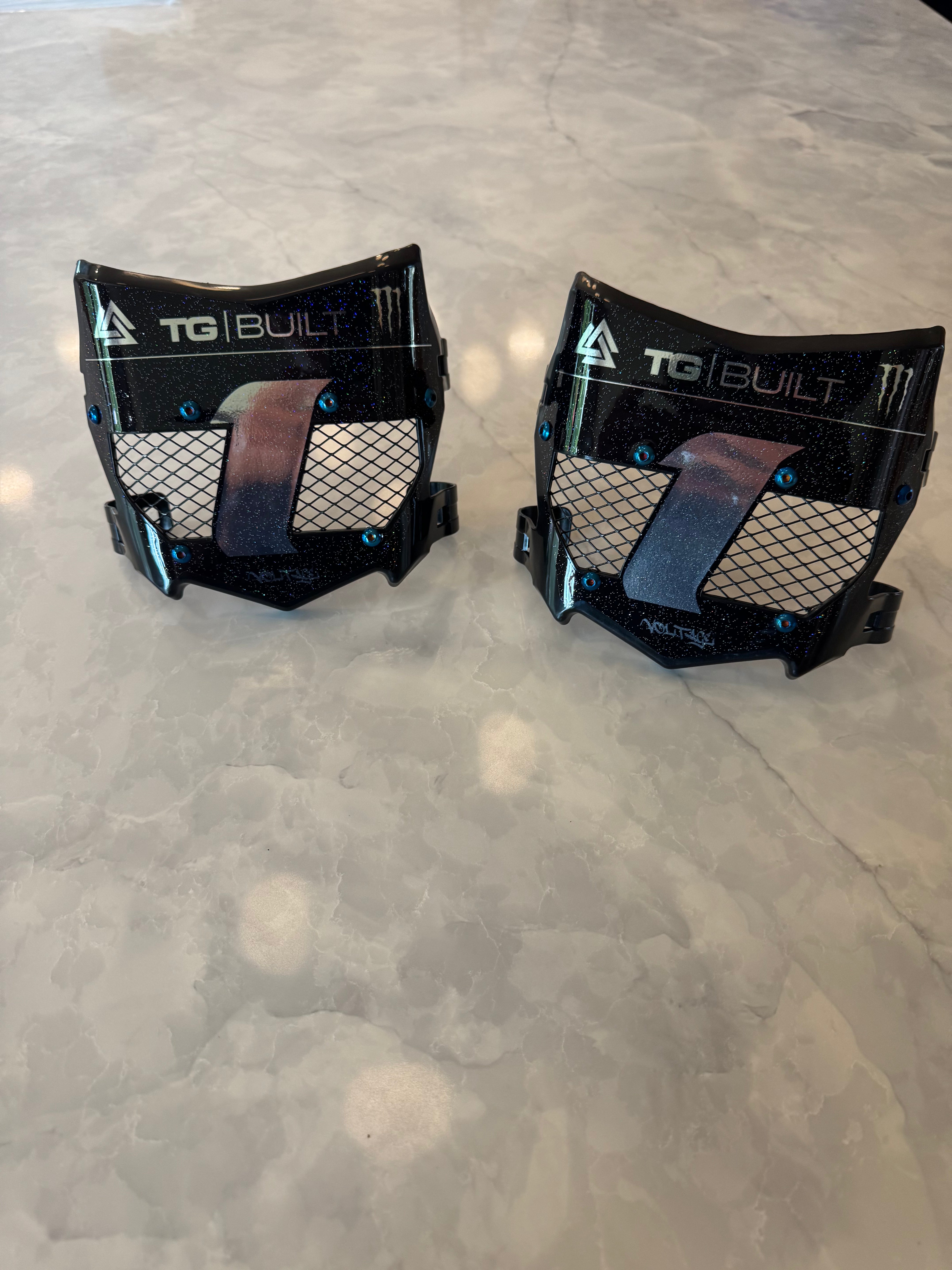
- Lighting: A model-specific plug-and-play light can improve visibility and simplify wiring. Confirm connector, mount, switch, weather sealing, and stock status before ordering. Shop e-moto lights.
A light and supermoto wheels do not make an Ultra Bee street legal. Registration rules can also involve the title or VIN, insurance, mirrors, turn signals, brake lights, horn, tires, speedometer, and other equipment. Requirements vary by jurisdiction, so check the rules where the bike will be registered and ridden.
A staged Ultra Bee build plan
| Stage | What to do | Stop before moving on if… |
|---|---|---|
| Baseline | Inspection, maintenance, ergonomic setup | The bike has leaks, bearing play, damaged wiring, or worn brakes/tires |
| Control | Brake setup, wheels/tires, suspension tuning | The bike does not stop, steer, or track consistently |
| Reliability | Protection, cooling, model-specific hardware | Parts rub, bind, overheat, or loosen |
| Performance | Controller, battery, motor, gearing, tune | Compatibility or thermal limits are uncertain |
This order is intentionally flexible. A pavement rider may install supermoto wheels before changing brake parts. A heavier motocross rider may need springs before anything else. The rule is simple: solve the limitation you can identify, then test before buying the next part.
Frequently asked questions
What should I upgrade first on a Sur-Ron Ultra Bee?
Start with a mechanical inspection and controls. If the bike is healthy, choose the next upgrade based on use: wheels and tires for a pavement conversion, suspension setup for a heavier or aggressive off-road rider, or protection for rocky trails. Add power only after braking, traction, and suspension are dependable.
Are 17-inch supermoto wheels worth it on an Ultra Bee?
They are worth considering when the bike is used mainly on pavement or a closed-course supermoto track. They open up road-tire choices and can make steering feel quicker. Dirt wheels remain the better choice for loose terrain, obstacles, and off-road ground clearance.
Can a Sur-Ron Ultra Bee be made street legal?
Possibly, but the answer depends on local vehicle and registration rules. Wheels and a headlight alone are not enough. Confirm title/VIN eligibility, registration, insurance, required equipment, and tire rules with the relevant motor-vehicle authority before spending money on a street conversion.
Do FXT Racing Ultra Bee parts require modification?
Some FXT Racing products are model-specific and direct-fit, but compatibility depends on model year, variant, and other installed parts. Read the complete product description and confirm fitment with FXT Racing when a bike has non-stock brakes, forks, wheels, controller, motor, or battery.
How much does it cost to upgrade an Ultra Bee?
The cost ranges from basic maintenance and setup to several thousand dollars for a complete power system. Build a budget around a specific goal, then include installation, tuning, supporting hardware, and protective equipment. Check live product pages for current prices rather than relying on a price copied into an article.
Will power upgrades reduce range?
Not necessarily, but using the extra performance usually consumes energy faster. Battery capacity, tune, speed, terrain, temperature, tire choice, gearing, and rider weight all affect range. Compare usable energy and system compatibility—not voltage alone—when planning a range upgrade.
Build the Ultra Bee you actually need
The best Ultra Bee build is not the one with the longest parts list. It is the one that feels predictable, fits the rider, and works on the terrain where it is used. Establish a safe baseline, solve one limitation at a time, and verify fitment before ordering.
Shop the products in this article:
- Ultra Bee supermoto wheels: standard wheelset or chrome wheelset
- Ultra Bee suspension upgrades
- Ultra Bee power upgrades
Recommended tools and gear:
- Metric hex and Torx bit set
- Quality torque wrench covering the required torque range
- Motorcycle stand
- Tire-pressure gauge
- Suspension sag measuring tool
Add Amazon Associates links only after account approval, and include the required affiliate disclosure before the first affiliate link.
Get build guides in your inbox. Join the FXT Racing email list for Ultra Bee setup tips, install guides, new parts, and deals.

Leave a comment
This site is protected by hCaptcha and the hCaptcha Privacy Policy and Terms of Service apply.